

Watches, art, cars, jewelry, handbags, wine and more — cleaned, USD-normalized, and searchable.
Get Started →
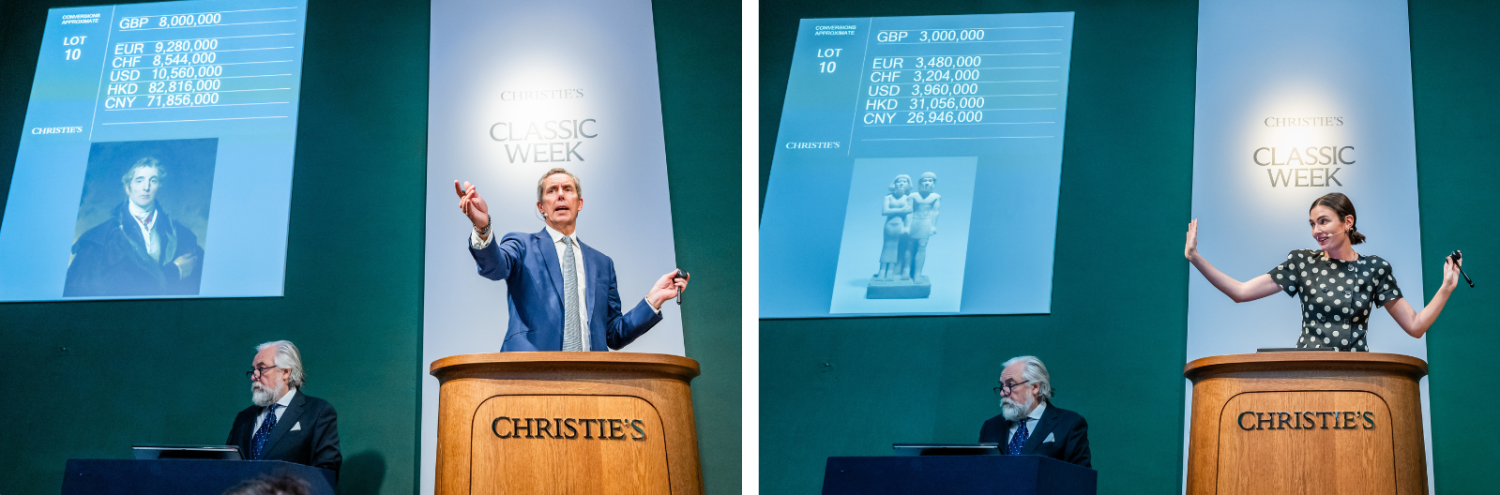
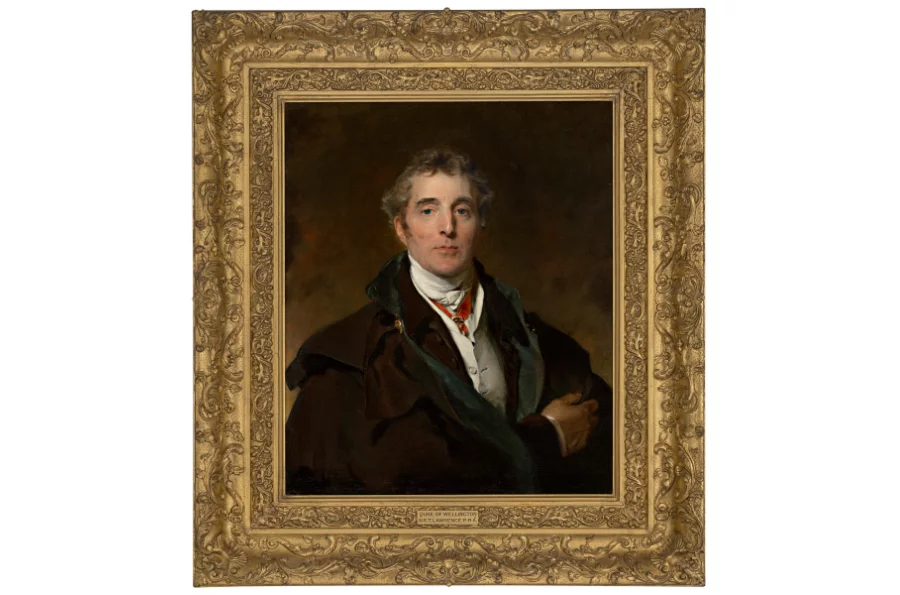
London, 22 May 2026 - Sir Thomas Lawrence painted this celebrated portrait of the Duke of Wellington, Britain's greatest military hero, following his defeat of Napoleon at the Battle of Waterloo in 1815. Considered by Wellington himself to be 'one of the best if not the best' that Lawrence ever painted, it will be the highlight of Christie's Old Masters Evening Sale on 30 June, during Classic Week in London (estimate: £8,000,000 to £12,000,000). This is an outstanding example of Lawrence's work that helped secure his reputation, and has enthralled subsequent generations of artists and collectors. Begun in 1820, the year that Lawrence was elected President of the Royal Academy where the picture was later exhibited to great acclaim in 1822, the artist succeeded in penetrating Wellington's aura of heroism and masterfully capturing the essence of the man. It was this portrait, of the eight that Lawrence executed of Wellington, that the sitter chose to gift to his friends and admirers in the form of a mezzotint by Samuel Cousins, thus establishing it as one of the best-known images of him. The painting was one of the stars of the 2010 to 2011 exhibition Thomas Lawrence, Regency Power and Brilliance, at The National Portrait Gallery, London. This exceptional picture is being offered from the important collection of the late Sir Robert Ogden, C.B.E., Hon. L.L.D. (1936 to 2022), a visionary British businessman and philanthropist.
John Stainton, Christie's Deputy Chairman UK and International Deputy Chairman of Old Masters, commented: "Echoing the images created by Hans Holbein of King Henry VIII, or perhaps those by Gilbert Stuart of George Washington, Lawrence's series of portraits of the Duke of Wellington seem to define their era. That Britain's greatest military hero, and the architect of post-Napoleonic peace in Europe, appears to have favored this subtle and intelligent portrait over all others, says much about the sensibilities of 'The Iron Duke'. Each of the three times it has previously changed hands, from the Duke's great friends the Arbuthnots to the 6th Earl of Rosebery, to the Goodbody family, and to the late, great, Sir Robert Ogden, this masterpiece of portraiture has passed through Christie's, and we feel hugely honored to offer it for sale again. I would encourage everyone who can to seize the opportunity of seeing it during the public views in New York and London."
Sir Robert Ogden, C.B.E., Hon. L.L.D.
A proud Yorkshireman, Sir Robert built a business empire that encompassed quarrying, mining, manufacturing heavy engineering equipment, and property, famously pioneering the transformation of the London Docklands. Philanthropy was central to Sir Robert's ethos: he funded state-of-the-art cancer treatment centers in Harrogate and Northallerton, gifted a redundant school to the National Autistic Society to create the Robert Ogden School, and funded university scholarship schemes for hundreds of disadvantaged students from South Yorkshire. This support continues through the Sir Robert Ogden Charitable Foundation, founded with his second wife Ana, and a new Macmillan Centre carrying his name will shortly open in York.
Sir Robert was a passionate follower of horseracing; he was crowned champion National Hunt owner three times, with legendary mounts such as See More Business, Voy Por Ustedes, and Exotic Dancer racing in his celebrated mauve and pink colors. Shifting his focus to flat racing and breeding, he continued to enjoy success at the highest level, including with Amazing Maria who won Group 1 races at Newmarket and Deauville, and Sans Frontieres who won the Irish St Leger in 2010.
Lawrence and Wellington
Lawrence first painted the Duke of Wellington in the summer of 1814, in the wake of his victorious Peninsular Campaign against Napoleon's armies in Portugal and Spain. The challenge for the artist, Wellington's exact contemporary, was how to capture both the celebrity and the humanity of the greatest military hero of the day, a man feted as Europe's military savior. In total, Lawrence was to execute eight portraits of Wellington over a period of fifteen years and it is perhaps these portraits more than those of any other artist that have defined Wellington in visual terms for posterity.
An abiding friendship
The Duke of Wellington's close friends Charles and Harriet Arbuthnot, whom he had met in Paris in 1814, commissioned this portrait by Lawrence in 1820. Charles Arbuthnot (1767 to 1850), a diplomat and politician, had served in important roles in Sweden and Portugal, and for a short while as Under Secretary for Foreign Affairs, before the diplomatic assignment for which he is chiefly remembered, as Ambassador Extraordinary to Constantinople. Upon returning to England he became Joint Secretary of the Treasury, but his influence extended beyond his formal government role on account of his popularity across the political spectrum. One of Wellington's most intimate friends, he married as his second wife Harriet Fane, who became one of Wellington's closest confidantes. After her premature death in 1835, Charles Arbuthnot spent the remaining fifteen years of his life in the company of Wellington at the Duke's London home, Apsley House.
Wellington: the man behind the hero
This remarkable portrait stands out among Lawrence's depictions of the Duke of Wellington for the simplicity of its conception and its intimacy, which seems to reflect the close relationship between Wellington and the Arbuthnots. Unlike the more obviously heroic portraits that had preceded it, the Duke is shown in civilian clothes rather than military uniform, and a military cloak, with only the inclusion of the Insignia of the Golden Fleece (a unique honor for somebody neither royal nor Roman Catholic), alluding directly to the scale of his military achievements. It mirrors, to an extent, the private side of the hero which Harriet Arbuthnot reveals in her historically illuminating diaries, published in 1950 long after her death, which shed light on many of the principal figures of the day including Canning, Castlereagh, Wellington, Liverpool and Peel. When Harriet Arbuthnot saw the finished portrait she recorded that she considered it 'more like him than any picture I ever saw of him and quite different...' remarking that while 'All other pictures of him depict him as a hero this portrait has all the softness and sweetness of countenance which characterises him when he is in the private society of his friends' and noting also that 'the cloak is just like the Duke wears it, and the hand remarkably like!' The Duke shared her enthusiasm for the portrait, writing to her in November 1820 that it 'is as good as any Lawrence ever painted' and later noting to the Duchess of Northumberland in a letter of 13 May 1837 that 'Mr. Arbuthnot's picture is one of the best if not the best that he ever painted'.
Provenance
This picture remained in the possession of the Arbuthnot family until it was sold at Christie's in 1878, when it was acquired by Archibald Primrose, 5th Earl of Rosebery (1847 to 1929). Rosebery, who had married Hannah de Rothschild, daughter of Baron Mayer de Rothschild and reputedly the richest heiress in England, in March that year, was to form a celebrated collection of historical portraits, while pursuing a political career that culminated in him becoming Prime Minister in 1894. The portrait was later sold by Archibald, 6th Earl of Rosebery at Christie's in May 1939, as one of the highlights of an important collection of pictures, when it was acquired by W.U. Goodbody.
Sale highlights
(Press Release)