

Watches, art, cars, jewelry, handbags, wine and more — cleaned, USD-normalized, and searchable.
Get Started →
London, 25 May 2021 - Thought lost for almost a century, the Honresfield Library was assembled with passion by self-made Victorian industrialists Alfred and William Law at the turn of the 20th century and has since been maintained with care by generations of the Law family. A "lost library" of British literature, it will be offered at Sotheby's across three auctions in 2021 and 2022, including the most important Bronte material to come to light in a generation, alongside two of the greatest Scottish manuscripts in private hands.
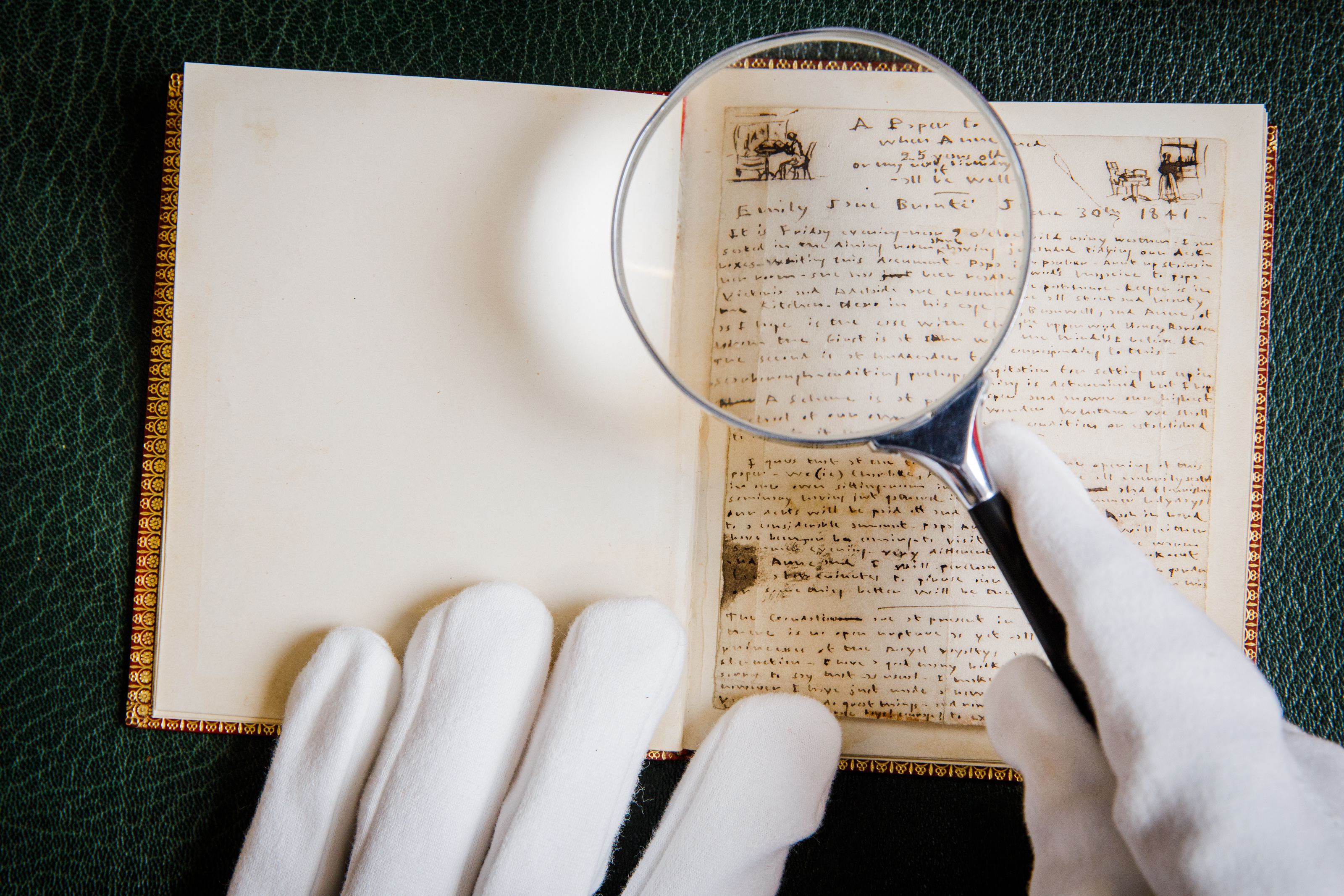
A unique treasury replete with cornerstones of British culture, its re-emergence after almost 100 years in obscurity marks a defining moment for bibliophiles in what is set to be one of the great library sales of recent years. Among the library's holdings is the most important material by the Bronte sisters to come to light in a generation, unrivalled in importance by any other private collection.
The rare pieces open a window onto the short but amazing lives of Charlotte, Emily, Anne and even Branwell Bronte. Treasures include an extremely rare handwritten copy of Emily's poems, with revisions from Charlotte (est. £800,000 to 1,200,000), and the well-loved Bronte family copy of Bewick's History of British Birds, the book made famous in the opening pages of Jane Eyre (est. £30,000 to 50,000), brimming with entertaining annotations from their father Patrick.
Little-seen letters to and from the likes of fellow novelist Elizabeth Gaskell, Hartley Coleridge (son of poet Samuel Taylor Coleridge), George Smith, publisher and vital champion of "The Bells" (the Brontes' secretive pseudonym), and many more, abound. Scottish literature is also at the heart of the collection, which includes the most important manuscript by Scotland's national poet, Robert Burns, in private hands.
A compendium of poems, notes and ideas put together by Burns as an unknown twenty-four year old, First Commonplace Book offers a unique insight into the bard's mind. It was last sold at Sotheby's in 1879, for £10. The collection also includes other individual handwritten manuscripts of Burns's poems and original letters to friends, family, patrons and lovers which build a picture of his colorful life.
Romantic writer Sir Walter Scott, the second-most quoted writer in the Oxford English Dictionary after Shakespeare, is also represented, most notably by the complete manuscript for Rob Roy, one of the last remaining manuscripts of a great 19th century novel that is not now in an institution. Further noteworthy lots include Jane Austen first editions, among them Emma, Northanger Abbey, Persuasion and Pride and Prejudice, a copy of Don Quixote printed in 1620 for Edward Blounte, the publisher famous for the First Folio of Shakespeare's plays, and an annotated copy of Alfred Lord Tennyson's poems with pages showing the author's changes from proof printing in his hand.
There is hardly an area that is untouched, with Homer, Ovid, the Grimm Brothers, Montaigne, Ann Radcliffe, Horace Walpole, Charles Dickens and Mary Wollstonecraft also making an appearance. The more than 500 historic manuscripts, exceptional first editions, intimate letters and beautiful bindings will be offered across three auctions at Sotheby's, commencing this summer, with the first auction open for bidding from 2 to 13 July 2021. The public will get the chance to view the library, with exhibitions of highlights to take place in London, Edinburgh and New York.
Collection highlights include:
"Sotheby's has been bringing books together with collectors for more than 275 years, and the Honresfield library is a fitting tribute to that age-old tradition. Showcasing the depth of the literary interests of Alfred and William Law, the collection as a whole paints a unique portrait of the passions of one of the greatest and least-known collecting families from a golden age of book collecting. When the library went missing from public view in the 1930s, many assumed it had disappeared, and to now play a role in bringing it to a wider audience is a true career highlight." Dr Gabriel Heaton, Sotheby's English Literature and Historical Manuscripts Specialist.
The literature found in Honresfield Library tells some of the most fabled stories in history. It was assembled in the golden age of book collecting by self-made brothers and mill-owners Alfred and William Law. The brothers, both unmarried, lived together at Honresfield House, a large, plain two-story red brick structure, which had been built for William in 1879 at a cost of £5,068, near their factory in Rochdale.
The library took root in the aftermath of an era of Victorian progress and ambition. With a wave of country house building, newly rich industrialists and bankers were eager to display their wealth and taste, and given the social status of book collecting at the time, a library was among the first things to set about buying. However, the Laws were not quite following in these footsteps. The depth and style of their purchases marked them as sophisticated collectors clearly enthralled by their subject, acquiring literature by authors, including many female writers, that they loved who were writing 50 to 100 years before them, perhaps exemplified by the likes of Shirley, Charlotte Bronte's story of the Yorkshire textile industry.
Indeed, the brothers had grown up less than twenty miles from the Bronte home of Haworth in the 1830s, amid the harsh beauty of the Northern English uplands during the Industrial Revolution. Experiencing the time and landscape immortalized by the Bronte sisters, these works resonated deeply with the collectors. When Alfred died in 1913 (William having predeceased him), his chosen heir was his nephew Sir Alfred Law.
This proved to be extremely fortunate for the fate of the library. At a time when many other families faced unexpected estate taxes when recent heirs were killed in the trenches or died young of war injuries, Honresfield had a continuous owner until 1939. Alfred was also financially secure, which lessened the temptation to sell his uncles' treasures as was the case with many similar libraries in the 1920s and 1930s. In November 1939, Sir Alfred Law, who also remained unmarried, died and the library disappeared from public view.
(Press Release)