

Watches, art, cars, jewelry, handbags, wine and more — cleaned, USD-normalized, and searchable.
Get Started →
Sotheby’s will auction the source code for the World Wide Web as a non-fungible token, offered directly by its creator, Sir Tim Berners-Lee, who invented the web in 1989. Titled This Changed Everything, the standalone online sale runs from 23 to 30 June 2021, with bidding starting at $1,000. It is the first digital-born artefact the firm has brought to auction, and proceeds will benefit initiatives that Sir Tim and Lady Berners-Lee support.
Unique on the Ethereum blockchain, the NFT is composed of four elements: the original time-stamped files containing the source code written by Sir Tim; an animated visualization of the code; a letter he wrote reflecting on the code and the process of creating it; and a digital “poster” of the full code generated from the original files using Python, including a graphic of his signature. All are digitally signed.
The referenced files contain code running to approximately 9,555 lines. Their contents include implementations of the three languages and protocols invented by Sir Tim that remain fundamental to the web today: HTML (Hypertext Markup Language), HTTP (Hypertext Transfer Protocol) and URIs (Uniform Resource Identifiers), along with original HTML documents that instructed early users on how to use the application.
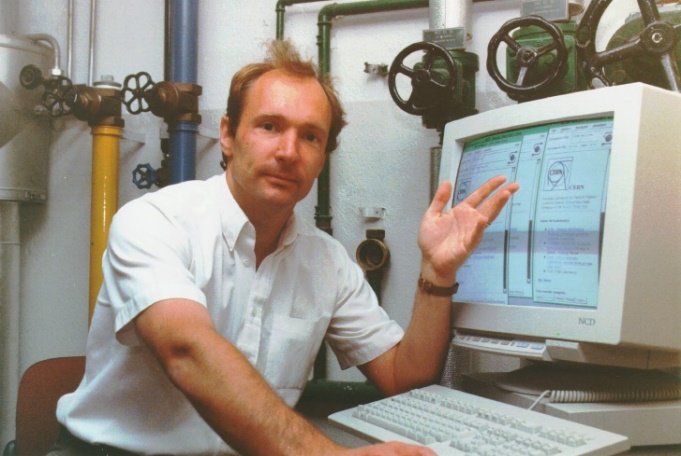
Sir Tim grew up in a household of mathematicians and computer scientists whose parents worked on the Ferranti Mark 1, the first commercially available general-purpose digital computer. After graduating from Oxford University, he developed the idea of a common information space, which led to the first web browser and the first website. The original “ World Wide Web” application was written in the Objective-C programming language using the Interface Builder on a NeXT computer, the machine designed by Steve Jobs during the years he was away from Apple.
In the decades since that first server and website, the web has grown to more than 1.7 billion websites accessed by 4.6 billion people worldwide. Sir Tim received the Turing Prize, known as the “ Nobel Prize of Computing”, in 2017, and was featured in the Opening Ceremony of the 2012 London Olympic Games, where he typed the message “ This is for everyone” as the stadium lit up with his words. He is now CTO of Inrupt, where since 2015 he has worked on Solid, a project to re-decentralize the web and give users control of their own data.
In his own words: “ Three decades ago, I created something which, with the subsequent help of a huge number of collaborators across the world, has been a powerful tool for humanity. For me, the best bit about the web has been the spirit of collaboration.”
(Press Release)