

Watches, art, cars, jewelry, handbags, wine and more — cleaned, USD-normalized, and searchable.
Get Started →
Sotheby’s London will bring to market one collector’s assembly of horological treasures, objects of vertu and unpublished letters by the great visionaries of the 18th and early 19th centuries, in a series of sales beginning in July 2020. Offered under the title The Collection of a Connoisseur, the series includes a dedicated live sale on 14 July with more than 150 works, and an online sale, The Collection of a Connoisseur: History in Manuscript, running 8 to 15 July, with further pieces spread across other Sotheby’s sales through the year.
The 14 July live sale is led by a gold four-minute tourbillon watch made circa 1808 for King George III by Abraham-Louis Breguet (1747 to 1823), the watchmaker credited with inventing the tourbillon, patented in 1801. Estimated at £700,000 to £1m (€805,000 to €1.2m, US$895,000 to US$1.3m) and engraved with the King’s royal cypher and the letters G & R, it is most probably the first tourbillon Breguet sold commercially. Recorded as No. 1297 in Breguet’s archives, the watch was sent to the maker’s London agent Recordon on 29 June 1808 and sold for FF 4,800; it took George III more than five years to pay in full.
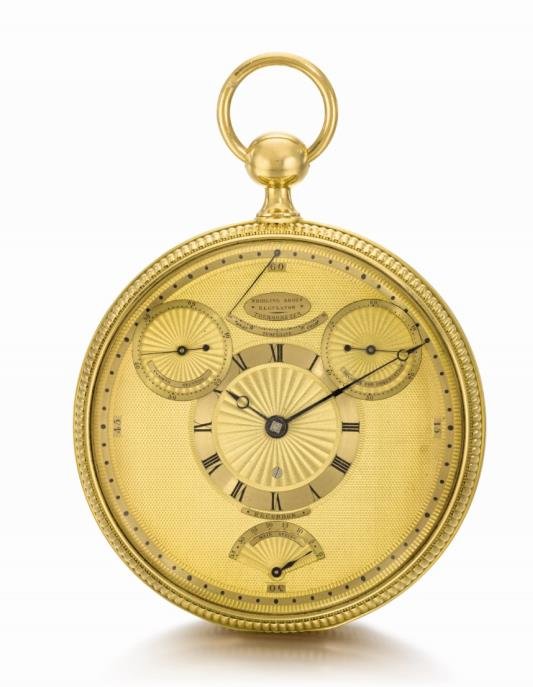
The watch is one of few Breguet tourbillons of its type: the only known four-minute example with an English dial, engraved “ Whirling About Regulator”, the only one with a thermometer, and the only Breguet tourbillon with a Robin escapement. It last appeared at Sotheby’s from a private collection in November 1999, selling for £551,500, and had not been seen publicly before that since the 1955 exhibition “ Five Centuries of Timekeeping” at Goldsmiths’ Hall in London. The live sale also offers rare Geneva automata, among them a ‘temple’ box made in 1807 to 1808 by Philippe Sené and Henri Neisser (est. £500,000 to £700,000) and a singing bird watch by Frères Rochat, circa 1820 (est. £400,000 to £600,000).
The History in Manuscript online sale gathers royal documents spanning three centuries, from an early signed letter by Elizabeth I (est. £12,000 to £18,000) and a document signed by Mary, Queen of Scots (est. £8,000 to £12,000), to the personal correspondence of Queen Victoria. Victoria’s letters include a series of 15 autograph letters to Lily Wellesley (est. £5,000 to £7,000), the wife of the Dean of Windsor, and a group of six etchings she produced as an amateur artist (est. £1,500 to £2,000).
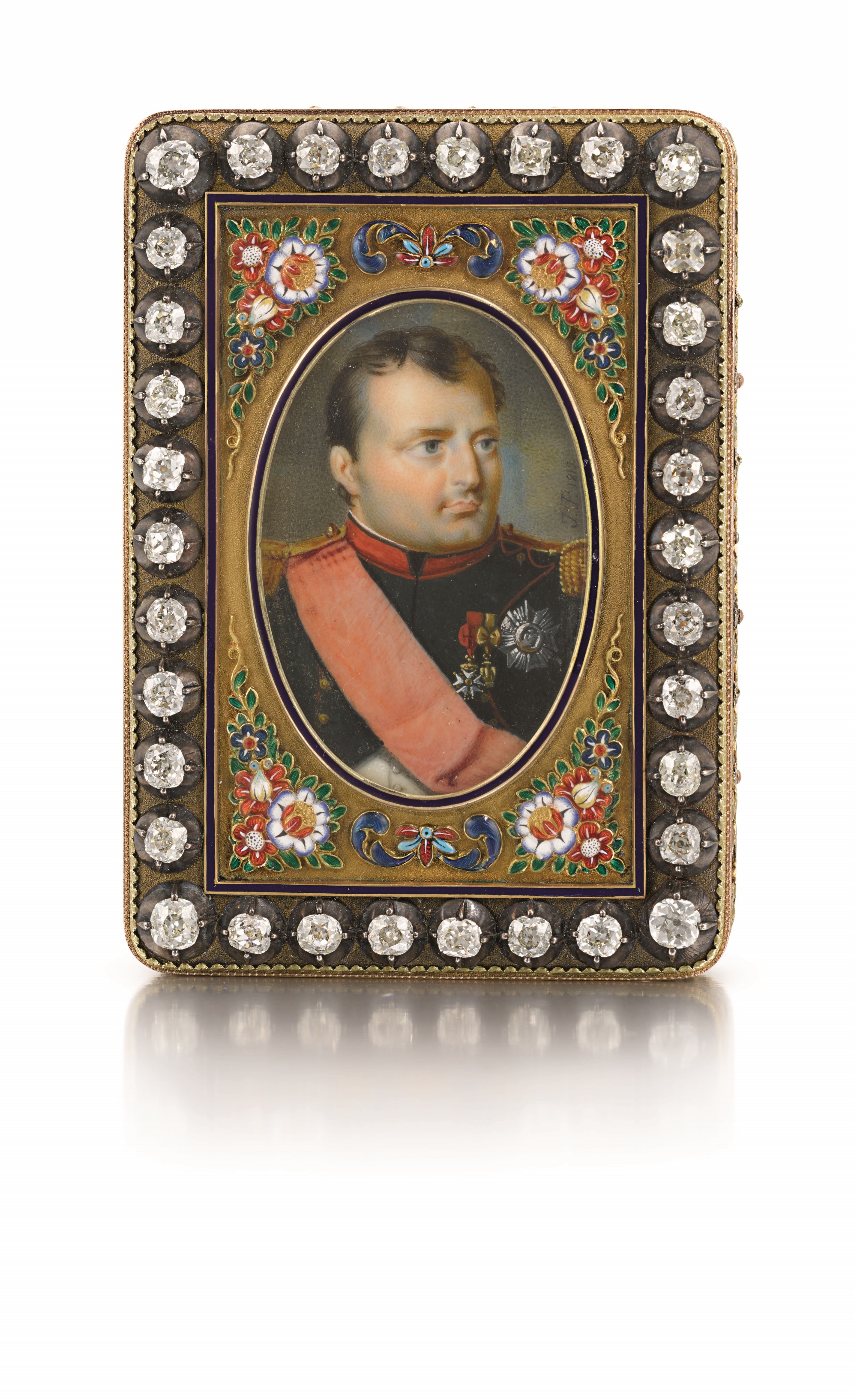
The Napoleonic era is represented by six letters and documents signed by Napoléon and seven by Lord Nelson, including letters connected to his victories at the Nile, Copenhagen and Trafalgar. Related lots include the grant of the Dukedom of Brontë (est. £40,000 to £60,000), a diamond-set walking cane presented to Nelson by the inhabitants of Zante after the Battle of the Nile in 1798 (est. £70,000 to £90,000), and a tortoiseshell snuff box with a miniature of Empress Joséphine by Jean-Baptiste Isabey (est. £8,000 to £12,000).
Further lots include The British Legion Album (est. £30,000 to £50,000), a First World War commemoration of roughly 527 inscriptions with contributions from figures such as Housman, Yeats, William Orpen and Augustus John; an autograph letter by Claude Monet appealing for one hundred francs (est. £1,500 to £2,000); and a signed photographic portrait of Charles Darwin by Oscar Gustave Rejlander (est. £6,000 to £8,000).
(Press Release)