
Every figure on the show comes from 13M+ cleared auction results — searchable, USD-normalized, updated daily.
Get Started →
Explore the dashboards behind every number on the show, and unlock our full market reports with membership.
Player shows the Art Market feed. Open the episode for this date on your platform of choice.
A weekly look at the global art market within the context of the broader economy. This week, two stories about art and the long shadow of its history: a previously unknown archive from the doctor who cared for Van Gogh in his final days, and a New York court ordering the return of a Nazi-looted Modigliani. Then the verdict on Art Basel and the state of the British art trade a decade after Brexit.
Good morning. It's Tuesday, June 23. I'm Sharon, and this is Art Market from ALT/FNDATA, a weekly look at the global art market within the context of the broader economy.
This episode of Art Market is brought to you by ALT/FNDATA, the market intelligence platform for insights on the luxury markets and related public equities. With a membership, you can unlock access to dashboards, reports and cutting-edge insights to keep your finger on the pulse of the market and drive your competitive advantage. Learn more at altfndata.com/membership.
This week, two stories about art and the long shadow of its history. A previously unknown archive from the doctor who cared for Van Gogh in his final days, and a New York court ordering the return of a Nazi-looted Modigliani worth as much as 30 million dollars. Then the verdict on Art Basel and the state of the British art trade a decade after Brexit.
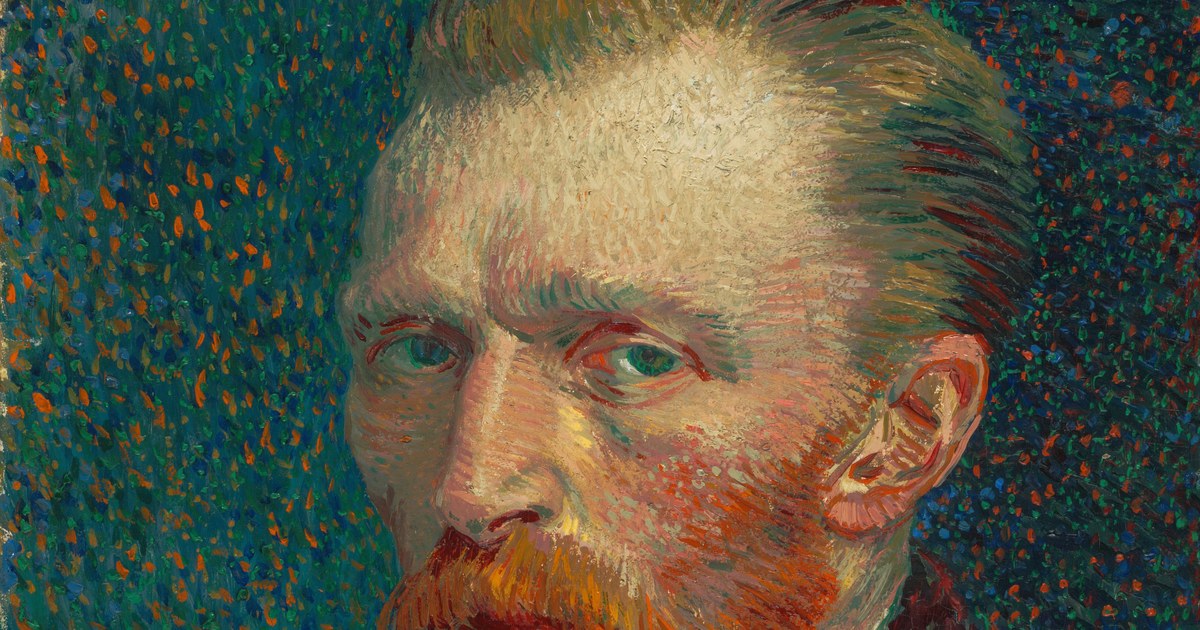
We begin with a remarkable find. A previously unknown archive belonging to Paul Gachet, the doctor who cared for Vincent van Gogh in the last weeks of his life, has come to light, revealed this month by the Van Gogh specialist Martin Bailey in The Art Newspaper. The archive runs to more than 500 items: documents, photographs, letters, Gachet's own artworks, and family memorabilia, much of it catalogued by Gachet's son back in 1923. Its most important piece is a haunting one. It is Gachet's drawing of Van Gogh on his deathbed, dated the 29th of July, 1890.
A little background for anyone who does not know the story. Van Gogh spent his final months in the village of Auvers-sur-Oise, just north of Paris, under the care of Dr. Gachet, who was himself an amateur artist and a friend to the Impressionists. On the 27th of July, 1890, Van Gogh shot himself, and he died two days later. Gachet's sketch is one of only three known images recording the artist's death, which is what makes it so significant. For now, the owner, who wishes to remain anonymous, is holding on to the collection and has not announced any plans to sell or to donate it. But its mere existence adds new detail to the most heavily studied few weeks in all of art history.
Our second story is also about history, and about who gets to own it. After more than a decade in the courts, a New York judge has ordered the art dealer David Nahmad to return a painting by Amedeo Modigliani that was looted by the Nazis. The work is "Seated Man with a Cane," painted in 1918, a portrait of a chocolate merchant, and it is valued at as much as 30 million dollars.
The painting once belonged to Oscar Stettiner, a Jewish dealer in Paris who fled the city before the Nazi occupation in 1939, leaving his collection behind to be seized and resold. Nahmad bought the picture at a Christie's auction in 1996 for 3.2 million dollars, and it has sat in storage in Switzerland ever since. Ruling on the 16th of June, Justice Joel Cohen found that Stettiner, in his words, owned, or at a minimum had a superior right of possession of the painting, and never voluntarily relinquished it. Nahmad now has 30 days to hand the work to Stettiner's grandson, Philippe Maestracci, although his lawyers say they will appeal. It is one of the highest-value Nazi-era restitution rulings in years, and a reminder that provenance, the ownership history of a work, is not just paperwork. It can decide who owns a 30 million dollar painting.
Now to the fair that has dominated the calendar. Art Basel has closed, with 290 galleries from 43 countries, and the verdict is cautiously positive. Dealers reported solid sales across price points, a relief after a couple of uncertain years, though it was the very top of the market that did the heavy lifting. The fair's biggest reported sale was a 1963 Picasso, The Painter and His Model in a Landscape, which carried an asking price of 35 million dollars at the gallery Hauser and Wirth, the same dealer that also placed a 20 million dollar Gerhard Richter and a 5 million dollar Cy Twombly. A sculpture by Yves Klein sold for about 2.5 million dollars at Xavier Hufkens. So the blue chips moved; the open question is everything beneath them.
That new shape is clearest in London, where The Art Newspaper this week took stock of Brexit's impact on the UK art trade, a decade on from the vote. The headline is that London has held on to its position as the world's second-largest art market, behind the United States, but its lead has narrowed. According to the art economist Clare McAndrew, the UK's share of global art sales has slipped from 21 percent in 2016 to 18 percent last year. The erosion is sharper in one of London's traditional strengths: its share of the European Old Masters market has fallen from 52 percent in 2014 to 38 percent in 2025.
The cause is less about demand than about friction. Leaving the European Union added layers of paperwork to the simple act of moving art across a border: import VAT, export licenses, and customs documents called ATA carnets. As Amanda Gray, a lawyer at Mishcon de Reya, puts it, gallerists and collectors have borne the brunt, in added cost, uncertainty, and delay. The effect has been uneven. The very top of the market is largely insulated, as a 200 million pound single-owner collection at Sotheby's this year showed, but the lower end has been squeezed hard. One number captures the institutional shift: the count of European Union galleries with a physical presence in London has fallen from eight in 2016 to zero today.
That is Art Market for Tuesday, June 23.
For insights on the data behind today's stories, the ALT/FNDATA membership gives you access to a rich library of market data dashboards, reports and insights. Get started at altfndata.com/membership or reach us anytime at info@altfndata.com.
I'm Sharon, from ALT/FNDATA. Closing Price is this evening at 5 PM Eastern, and Open Bid returns tomorrow morning at 6. If you enjoy the show, please subscribe and leave us a five-star rating.