

The season the white stone went quiet
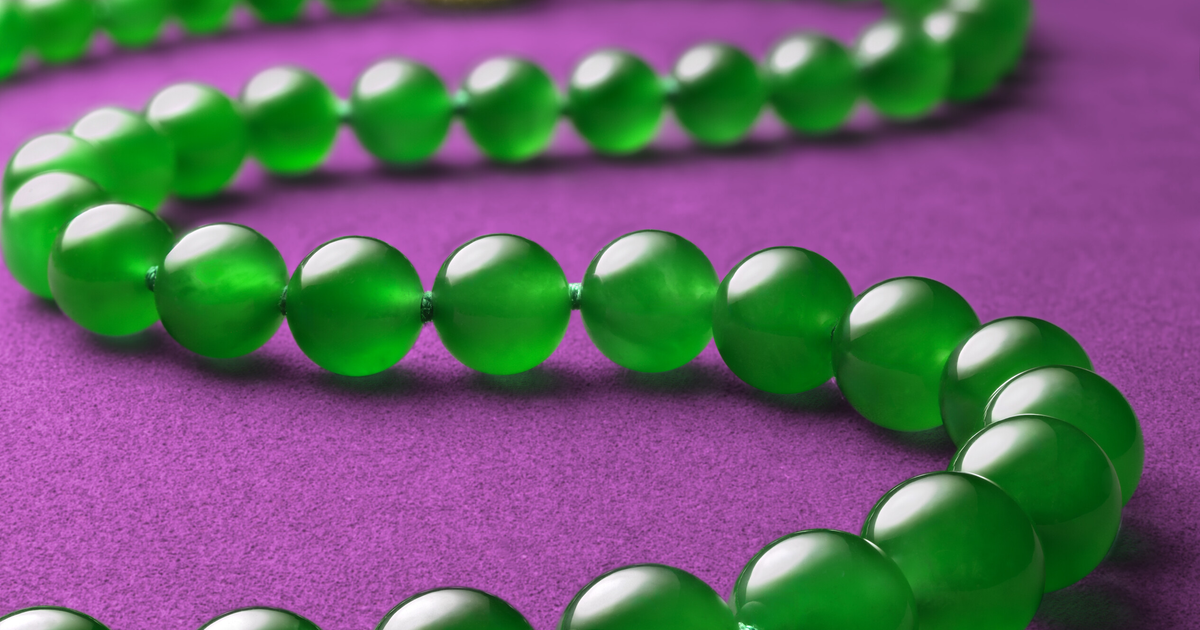
The first half's jewelry headlines came in color. In Hong Kong on May 26, a magnificent jadeite bead and colored diamond necklace made $25.6 million at Christie's, the top jewel of the half in our record and the second-highest jadeite result we hold, behind only the Hutton-Mdivani necklace of 2014. A week earlier the Ocean Dream, a colored diamond famous enough to carry its own name, made $17.4 million. June added the Azure Blue at $8.4 million and another colored diamond ring at $8.1 million. Four trophies, four colored stones. The most expensive white diamond of the half does not appear until well down the list, and that, it turns out, is not an accident of one season.
The share shift
Measure the top of the jewelry market properly, every lot that realized $1 million or more across our deduplicated record of 1.8 million jewelry and gemstone results, and the mix has moved. In 2019 to 2021, white diamonds took 24.2 percent of million-dollar value on 76 lots. Since the start of 2024 the share is 14.2 percent on 43 lots. The market's total top-tier value held roughly steady between the two periods, so this is not a shrinking market; it is a market choosing different stones. Colored stones as a group, colored diamonds, sapphires, rubies, emeralds, jadeite and their kin, held two thirds of top-tier value in both periods, and the tier that grew fastest is the multi-stone high-jewelry suite.
| Family | Share 2019-2021 | Share 2024-H1 2026 | Beat high estimate, 2024-26 |
|---|---|---|---|
| Colored diamonds | 38.1% | 38.0% | 42% |
| Sapphire, ruby, emerald and kin | 22.1% | 23.1% | 75% |
| White diamonds | 24.2% | 14.2% | 64% |
| Jadeite | 6.6% | 1.3% (5 lots, led by the $25.6M necklace) | 40% |
| Multi-gem, pearl and other | 8.9% | 23.4% | 68% |
The heat map
Share tells you where the money settled; estimate performance tells you where the bidding fought. Million-dollar sapphire, ruby and emerald lots beat their high estimates 75 percent of the time in 2024 to H1 2026, up from 49 percent in 2019 to 2021 and the strongest reading of any family. White diamonds improved too, 64 percent against 32, in a half when everything ran hot, but the sharpest competition is unambiguously for color. The interesting exception is the colored diamond itself: the family holds the largest share of value, a stable 38 percent, yet beats its estimates only 42 percent of the time. That is what a fully priced trophy family looks like, estimates set for perfection and realized prices meeting rather than embarrassing them, while the sapphires and emeralds beneath are still being discovered by the bid.
The Hong Kong bid
The half's defining session was Christie's Hong Kong on May 26. The jadeite necklace led it at $25.6 million, and the same sale carried a run of Paraiba tourmalines led by a $1.3 million Tasaki ring, a stone that barely registered at auction a decade ago now stacking seven-figure results in a single room. Jadeite itself trades rarely at the top, five million-dollar lots in our record since 2024 against seventeen in the earlier period, but when it appears, it prints at the very top of the market. The geography matters as much as the stones: the colored-stone bid is strongest where the jadeite and Paraiba bidders sit, and the houses have responded by routing their best colored material east.
What this means
For dealers and collectors, the family table is a positioning map. Holding important colored stones means holding the families the top bid is chasing through their estimates; holding important white diamonds means holding the one major family whose share of the top tier nearly halved, where fewer bidders show up and negotiation favors the buyer. Neither is advice, both are facts about where competition currently lives, and they are visible only in realized prices.
For anyone pricing jewelry, the caution is the same one our estimate work keeps finding: published ranges lag the bid, and they lag unevenly by stone. A sapphire estimate is now the most likely number in the catalogue to be beaten; a colored-diamond estimate the most likely to be exactly right. Insurance values, dealer sheets and lending marks inherit those lags family by family. The realized-price record is where the correction lives, and this half it is written in color.
What to take away
One shift, three disciplines:
Color is where the competition is
Three of four million-dollar sapphire, ruby and emerald lots beat their high estimate. For buyers that means paying through the range to win; for consignors it means colored stones are the safest estimate in the catalogue.
The white stone is where negotiation lives
A near-halved share of top-tier value means fewer bidders competing for important white diamonds. Sellers should mind the thinner top bid; buyers of white stones hold more leverage than the retail market suggests.
Watch the suites
The multi-gem tier tripled its share as the high-jewelry houses consign bigger set pieces. If that continues, the top of the jewelry market becomes less about the stone and more about the object, which is how the watch and handbag markets already behave.
The top of the jewelry market did not shrink; it changed its stone. White diamonds' share of million-dollar value nearly halved while colored stones held two thirds, the sapphire and emerald bid runs hottest against its own estimates, and the half's four biggest results were a jadeite necklace and three colored diamonds. The colored-stone bid is not a season's fashion; it is five years of realized prices pointing the same way. We will keep measuring it the only way that settles it, at the hammer, family by family.
“At the million-dollar line, the jewelry market has chosen color: white diamonds' share of top-tier value has nearly halved since 2019, and the four most expensive jewels of the half were a jadeite necklace and three colored diamonds.”
Methodology & about
Methodology
This is a market read. Figures are from ALT/FNDATA's record of 10M+ auction results: the deduplicated union of 1.29 million jewelry and 544,000 loose-gemstone results, restricted to lots realizing $1 million or more in USD at nearest-date exchange rates, compared across 2019 to 2021 (36 months) and 2024 to H1 2026 (30 months); shares and rates are basis-comparable across the unequal windows. Stone families combine the catalogued primary gem with title analysis; colored diamonds are identified by fancy-color and colored-diamond title language, so an unnamed colored stone without title cues may be conservatively grouped with its base family. Multi-stone high-jewelry suites and lots without one attributable primary stone are reported as their own group (23.4 percent of recent top-tier value) rather than forced into a family. One duplicated $17.4 million row was identified and removed. Estimate performance compares realized prices, generally including buyer's premium, with published high estimates quoted on hammer; the basis lifts levels uniformly, so comparisons across periods and families are the signal. The H1 2026 anchor lots (the $25.6 million jadeite, May 26; the $17.4 million Ocean Dream, May 13; the June colored diamonds) are in our capture; jadeite's million-dollar sample since 2024 is small (five lots) and its share is read accordingly.
ALT/FNDATA is a market-data platform tracking 10M+ auction results across 100+ houses worldwide: the neutral, cross-market record of what luxury and alternative assets actually sell for at the hammer, not asking prices.
Cite this report
Source: ALT/FNDATA, “Why White Diamonds Are Losing the Top of the Jewelry Market” (July 2026). Based on million-dollar jewelry and gemstone results in ALT/FNDATA's record (deduplicated union of 1.29M jewelry and 544K loose-stone results), 2019 to 2021 against 2024 to H1 2026, with the H1 2026 anchor lots in our capture. © 2026 ALT/FNDATA · altfndata.com/reports/colored-stone-bid-2026