

Watches, art, cars, jewelry, handbags, wine and more — cleaned, USD-normalized, and searchable.
Get Started →
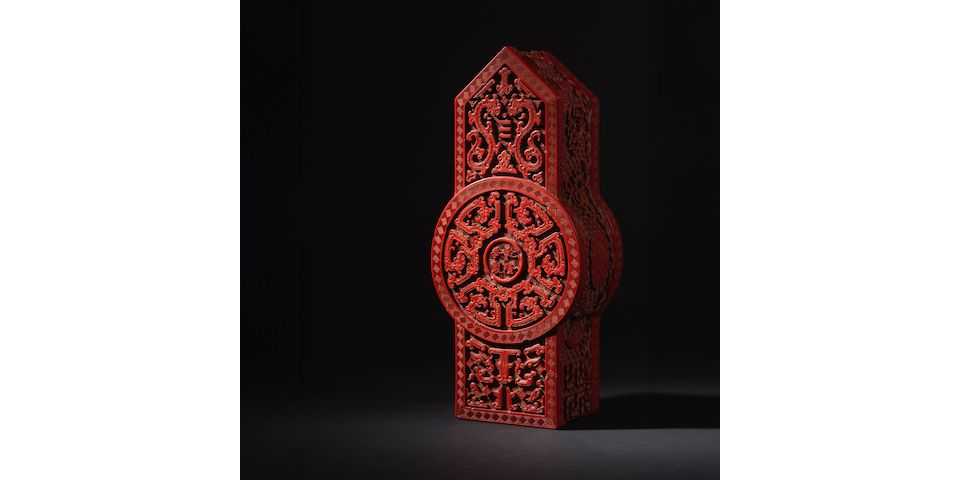
Paris, 9 June 2026 - The Bonhams Cornette de Saint Cyr Asian Art auction held at Avenue Hoche, Paris on 9 June 2026 achieved strong results across a range of exceptional Chinese works of art, porcelains, jades, furniture, and Buddhist sculptures. Competitive international bidding drove several lots well beyond their pre-sale estimates, highlighting continued demand for rare and high-quality Asian artworks. The sale's top-performing lot was a magnificent and very rare large archaistic carved cinnabar lacquer 'twelve imperial emblems' Guibi box and cover dated to the Qianlong period (1736 to 1795), which realized €121,050, significantly exceeding its estimate of €25,000 to 35,000. The superb quality of the carving, the superior craftsmanship, the elaborate design and the subject of the decoration on this specific Guibi box and cover, the size and the inscription that dates the box to the Qianlong period, all proclaim the imperial pedigree of this magnificent box which was likely to have been made for the Qianlong emperor.
The sale made a total of more than €1.2 million with 71% of lots sold (98% by value).
Caroline Schulten, Director of Bonhams' Chinese Art department in Europe, said: " The exceptional performance of the sale reflects the strength of the international market for rare Asian art and the enduring appeal of pieces with outstanding provenance, craftsmanship, and historical significance such as the Guibi box and cover. The results attracted participation from private collectors, and dealers across Europe, Asia, and North America, UK. We thank all consignors, bidders, and buyers for contributing to the success of this auction and look forward to welcoming clients to our upcoming sales in London in September."
A fine group of monochrome ceramics from a Belgian collection was led by a rare Qingbai melon-shaped ewer with its matching warming basin from the Song Dynasty (960-1279) which achieved €89,300, three times its low estimate. Made in Jingdezhen in the Song dynasty, the ewer is distinguished by its pure white body and light bluish translucent glaze with its brilliant surface. Thinly potted and delicately formed, the translucent hardness of Qingbai ware made these extremely serviceable. The same Belgian collection of monochromes included a rare pair of small lemon-yellow enamelled dishes bearing Yongzheng six-character marks and of the period which sold for €70,250 against a pre-sale estimate of €12,000 to 15,000.
A French collection of over fifty Japanese netsuke, assembled from the late 1960s to recently, was offered. A wood netsuke depicting a serpent by Tametaka, Nagoya, 18th century, sold for €32,000 against a pre-sale estimate of €6,000 to 8,000, a wood netsuke of five toads
by Masanao, Ise, Yamada province, early 19th century sold for €23,040 as well as a large wood netsuke of Bashiko, early 19th century.
Other notable results included:
• A calcified jade pendant XI from the late Eastern Zhou Dynasty, sold for €82,950 (estimate €5,000 to 8,000).
• A Huanghuali and mixed wood bookcase, Shujia from the late Qing Dynasty, sold for€40,960 (estimate €5,000 to 8,000).
• A Huanghuali 'Official's Hat' Yokeback Armchair, Guanmaoyi from the late Qing Dynasty, sold for €38,400 (estimate €5,000 to 8,000).
• A pair of jade pendants, Late Eastern Zhou Dynasty, sold for €32,000 (estimate €2,000 to 3,000).
• A rare Large Lacquer-Gilt Bronze Figure of Akshobhya Buddha, Ming Dynasty, dated 3rd year of Jiajing (1525), inscribed with the names of the commissioning donors and dated to the year 1525, sold for €32,000.
• An inscribed gilt-copper repoussé Figure of Shakyamuni Buddha, Nepal, dated 1664 sold for €32,000.
(Press Release)