

Watches, art, cars, jewelry, handbags, wine and more — cleaned, USD-normalized, and searchable.
Get Started →
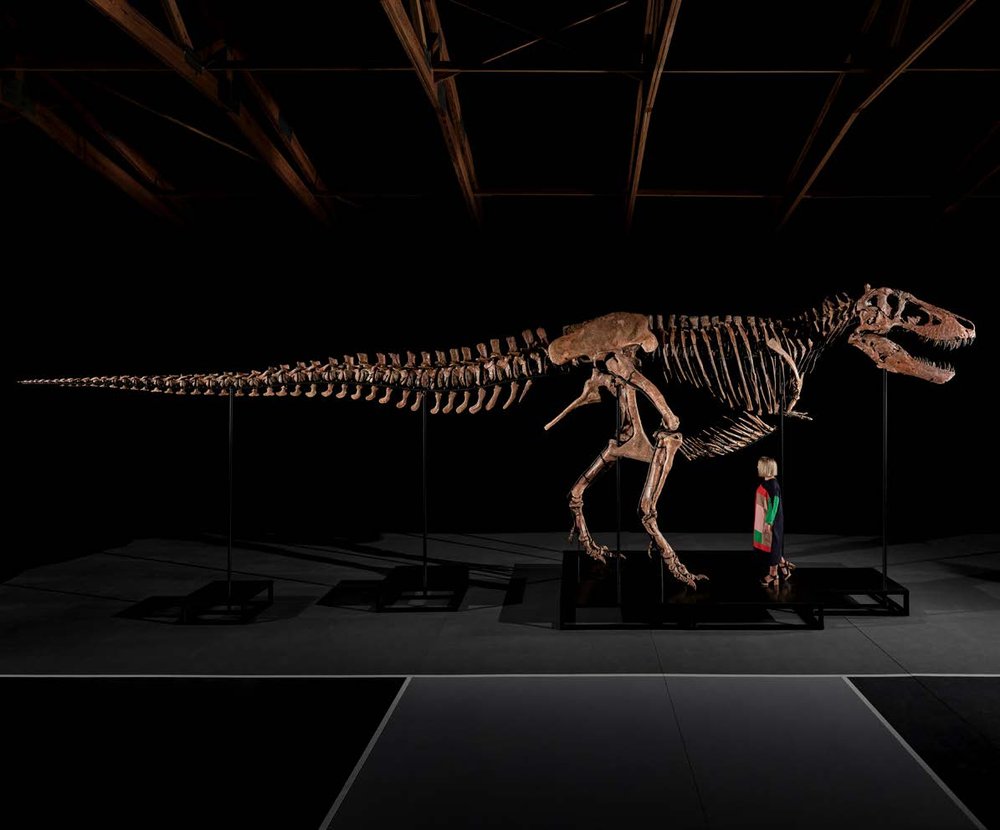
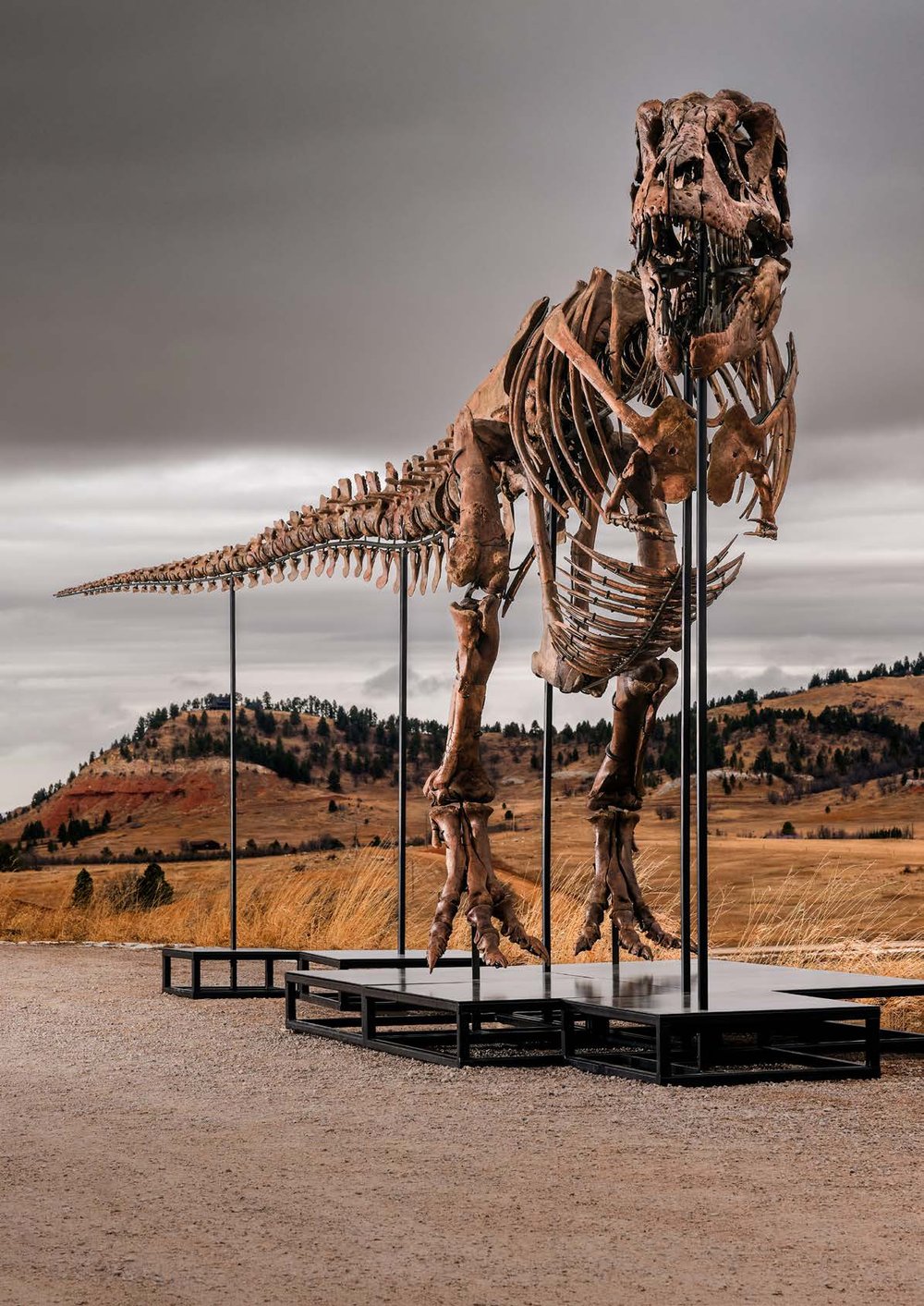
Sotheby’s will offer “ Gus,” one of the largest and most complete Tyrannosaurus rex specimens ever discovered, as the star highlight of its live Natural History auction in New York on 14 July. Estimated at $20 million to $30 million, the highest estimate ever placed on a dinosaur, the roughly 67-million-year-old fossil was excavated over field seasons in 2021, 2022 and 2023.
The sale marks the latest chapter in Sotheby’s Natural History series, which began in 1997 with the auction of Sue the T. rex, the first dinosaur ever sold at auction and now a centerpiece of the Field Museum in Chicago. The series continued in 2024 with the sale of Apex, which achieved $45 million and set a world record for any dinosaur or fossil at auction, and in 2025 with the juvenile Ceratosaurus at $30.5 million, the third highest price ever achieved for a dinosaur at auction. Apex is now on long-term loan to the American Museum of Natural History in New York.
The fossil was discovered by Thomas Heitkamp and his team on land owned by the late Gary “ Gus” Licking, a cattle rancher in Harding County, South Dakota. After years of finding teeth and small bone fragments on the ranch, Licking partnered with Heitkamp’s team, and pointed out a suggested area to search on the 6,500-acre parcel where “ Gus” was ultimately found. Licking passed away only one year into the excavation, never to see the discovery brought to light, and the specimen has been named in his honour. The team spent three summers excavating the fossil, followed by another three years of lab work, cataloguing and mounting each element.
Offered as a single specimen with full rights, “ Gus” comprises 183 fossil bone elements and is approximately 63 percent complete by bone count, with those bones representing 75 to 80 percent of the bone mass of the animal. It has an exceptionally preserved skull, with approximately 82 percent of the bones represented, including all six dentitions, a rare set of humeri, a rare furcula, two well represented feet, a completely represented pelvis, and a well represented axial skeleton. With a body length of approximately 38 feet, a skull length of 54 inches, a femur length of 50.39 inches (larger than that of Stan), and rising to 12 and a half feet tall, it ranks among the largest T. rex ever found.
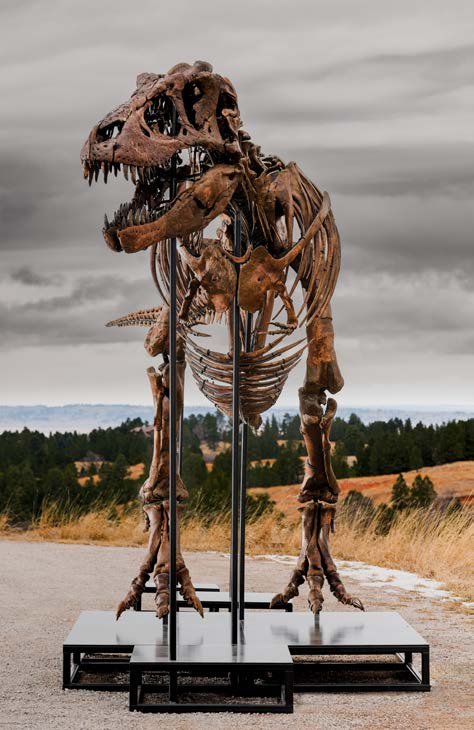
The specimen is also scientifically significant, with pathologies on the skull, vertebrae and appendicular skeleton, including fractured and healed bones in several ribs and gastralia, and clear bite marks on several skull bones and post cranial elements, possibly from scavenging. The first Tyrannosaurus rex was discovered by paleontologist Barnum Brown in 1902 in the Hell Creek Formation of southeastern Montana. In the intervening 122 years, only 32 or so T. rex have been discovered, many represented by only a single bone, and only two have been confirmed to be more than 60 percent complete: “ Sue,” now at the Chicago Field Museum, and “ Stan,” housed at the Natural History Museum in Abu Dhabi.
Ahead of the sale, “ Gus” will be on view from 1 to 14 July at Sotheby’s New York, 945 Madison Avenue, alongside further highlights from the firm’s Geek Week sales. The Natural History auction takes place on 14 July at 10 AM, followed by Space Exploration on 15 July at 10 AM and History of Science & Technology on 15 July at 2 PM.
(Press Release)