

Every figure on the show comes from 13M+ cleared auction results — searchable, USD-normalized, updated daily.
Get Started →
ALT/FNDATA Membership unlocks every market report and the self-serve dashboards. For teams, book a walkthrough with our data desk.

Player shows the Open Bid feed. Open the episode for this date on your platform of choice.
Your morning briefing on the luxury and collectibles markets. A tale of two deals frames the day: Chanel buys the 188-year-old Parisian shirtmaker Charvet while the leather-goods house Moreau Paris is sold off through a court-supervised process, consolidation at the top and attrition below. A single bottle of tequila becomes the most expensive ever sold at auction, new research finds luxury's own affluent shoppers are adopting AI faster than the brands, watchmaking opens a new chapter, Richemont backs six emerging designers, and European luxury opens firmer.
======================== BODY ========================
Good morning. It's Thursday, July 2. I'm Sharon, and this is Open Bid from ALT/FNDATA.
Today: a tale of two deals in French luxury, the most expensive bottle of tequila ever sold at auction, and a study that finds luxury's own shoppers are adopting artificial intelligence faster than the brands themselves. Plus a firmer open for European luxury. Closing Price wraps the day tonight.
This episode of Open Bid is brought to you by ALT/FNDATA, the market intelligence platform for insights on the luxury markets and related public equities. With a membership, you can unlock access to dashboards, reports and cutting-edge insights to keep your finger on the pulse of the market and drive your competitive advantage. Learn more at altfndata.com/membership.
We begin with a tale of two deals, and taken together they say a great deal about where luxury stands right now. On one side is strength. Chanel, the private house controlled by the Wertheimer family, has bought Charvet, the storied Parisian shirtmaker founded on the Place Vendôme back in 1838. Charvet has dressed royalty and heads of state for the better part of two centuries, and in recent seasons it has worked closely with Chanel's new artistic director, Matthieu Blazy, on several of his designs. The stated aim is to secure the future of the 188-year-old company, and it fits a pattern we keep seeing at the top of the market, where the great houses are spending not to chase volume but to lock up the rare craftsmanship that cannot be replaced, buying the ateliers themselves rather than merely the labels above the door.
On the other side is distress. Moreau Paris, a maker of fine leather goods, is being sold through a court-supervised process, with strategic and financial buyers now circling a brand that could not make it on its own. Put the two deals side by side and you have this market in miniature, a picture of consolidation at the top and attrition below it that has defined luxury for the past year. The houses with the balance sheets are acquiring craft and heritage, while the smaller and weaker names are quietly being picked off.
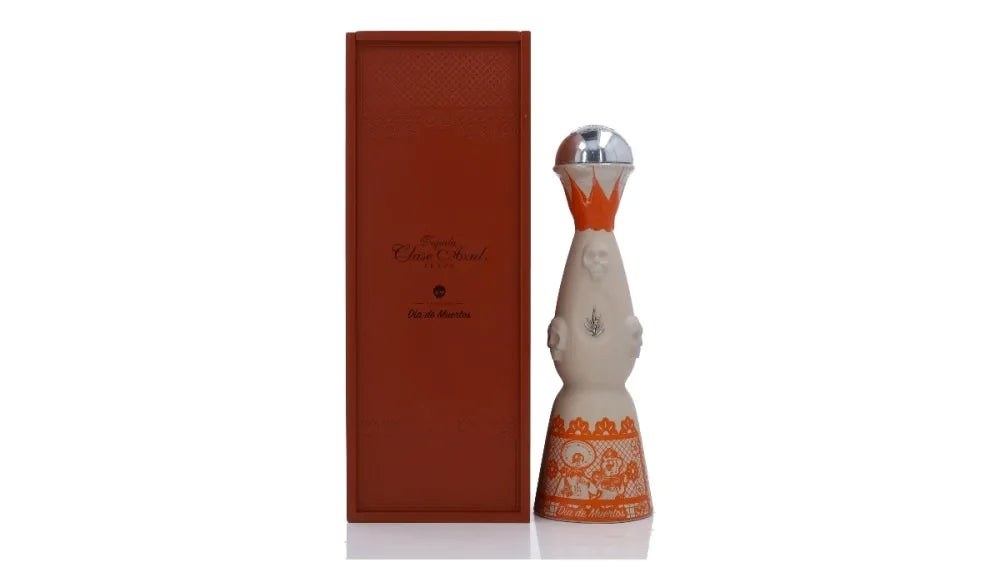
From the workshop to the saleroom, and a record you might not expect. A single bottle of tequila has just become the most expensive ever sold at auction. It was a Clase Azul Día de Muertos añejo from 2017, one of only three hundred ever made, and at a Sotheby's online sale it fetched thirty-five thousand dollars, nearly triple its high estimate and comfortably past the previous tequila record of a little over twenty-four thousand. The number that lingers, though, is where it started, because that same bottle first sold in Mexico for two hundred and fifty dollars, which means that in under a decade it appreciated something like a hundred and forty times over. It is one more reminder that the collectibles market is minting records in categories far beyond the traditional trophies of art and watches, and that rare spirits have quietly become one of the fastest-appreciating corners of the passion-asset world, where genuine scarcity, wherever it is found, still commands a premium.
Now a shift from the saleroom to the shop floor, and a finding that should give the big brands pause. New research from the consultancy Bain and Company shows that luxury's own customers are adopting artificial intelligence faster than the houses that sell to them. Affluent shoppers are already using generative AI to discover products, to compare them and to decide what to buy, while many brands are still debating whether to let the technology anywhere near their carefully guarded image. It is an unusual reversal. In most industries the company leads and the customer follows, but in luxury right now the wealthy buyer is out in front, and the houses that adapt fastest to how these clients actually shop will be the ones that hold their attention.
There is movement, too, at the independent end of watchmaking. François-Henri Bennahmias, the former chief executive of Audemars Piguet, who spent two decades turning that house into one of the industry's true powerhouses, is starting a watch brand of his own. Called N3W5, it will make its debut at Dubai Watch Week next year. And at the revived Universal Genève, the chief executive Georges Kern is rebuilding a long-dormant name with what he calls a couture house's approach, hinting that jewelry could be the next step. Both moves point in the same direction, toward a watch market where the energy sits not with the giant groups but with the founders and the revivalists betting on heritage and independence.
The giant groups are not standing still, though. Richemont, ticker CFR on the Swiss exchange at about 183 francs, and the owner of Cartier and Van Cleef and Arpels, is putting its weight behind six emerging designers, helping them produce and sell their collections at a Paris pop-up this fall as an offshoot of its in-house academy. For a group of Richemont's scale to invest in unproven talent is a small but telling signal that the establishment still believes there is room to grow this market, rather than simply defend the share of it that it already holds.
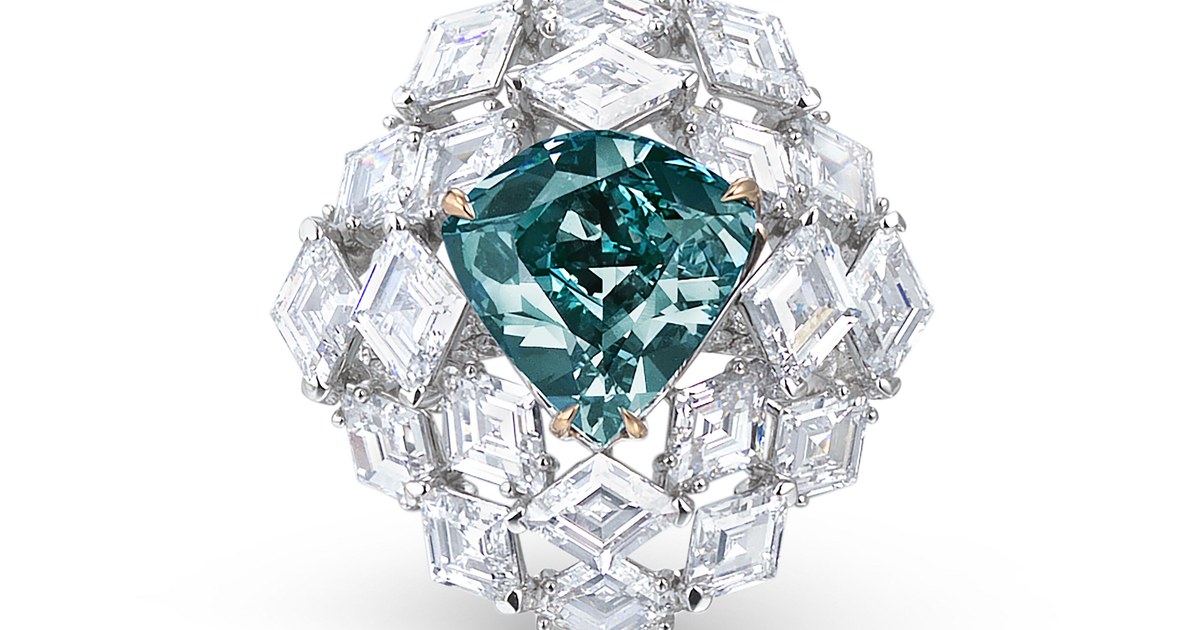
A couple of quick notes from the world of high jewelry. Messika has unveiled a one-of-a-kind necklace set with a 20.46-carat blue diamond from Botswana, one of the largest and rarest stones of its kind ever found in the country. And Fred, the jeweler owned by LVMH, is marking its 90th anniversary with a 101-carat yellow diamond it calls the Soleil d'Or, though collectors hoping to own it will be disappointed, because after a showing at Paris Couture Week the stone heads straight back into the house's private vaults.
Looking ahead to July's sales, the auction houses have an unusually eclectic slate on offer, from a dinosaur skeleton named Gus to a dramatic Highland landscape by Landseer and an early model of the Statue of Liberty.
[THE MARKETS, A FIRMER OPEN] (07-02 morning open)
Finally, a look at how the European luxury names opened, and after a soft start to the half, they steadied. Most of the complex edged higher, with Watches of Switzerland the standout, up almost 3 percent as it recovers from Monday's stumble, while LVMH, Kering and Hermès each firmed modestly. Burberry was the lone soft spot, down about half a percent. The US names open later this morning, and we will have the full read tonight on Closing Price.
======================== /BODY ========================
That's it on Open Bid for today, Thursday, July 2. Closing Price covers the day's signals this evening.
For insights on the data behind today's stories, the ALT/FNDATA membership gives you access to a rich library of market data dashboards, reports and insights. Get started at altfndata.com/membership or reach us anytime at info@altfndata.com.
Subscribe to get notified of new episodes, and if you love the show, please leave us a five-star rating on Spotify or Apple Podcasts.
I'm Sharon, from ALT/FNDATA. I'll talk with you in the next episode.