

Watches, art, cars, jewelry, handbags, wine and more — cleaned, USD-normalized, and searchable.
Get Started →
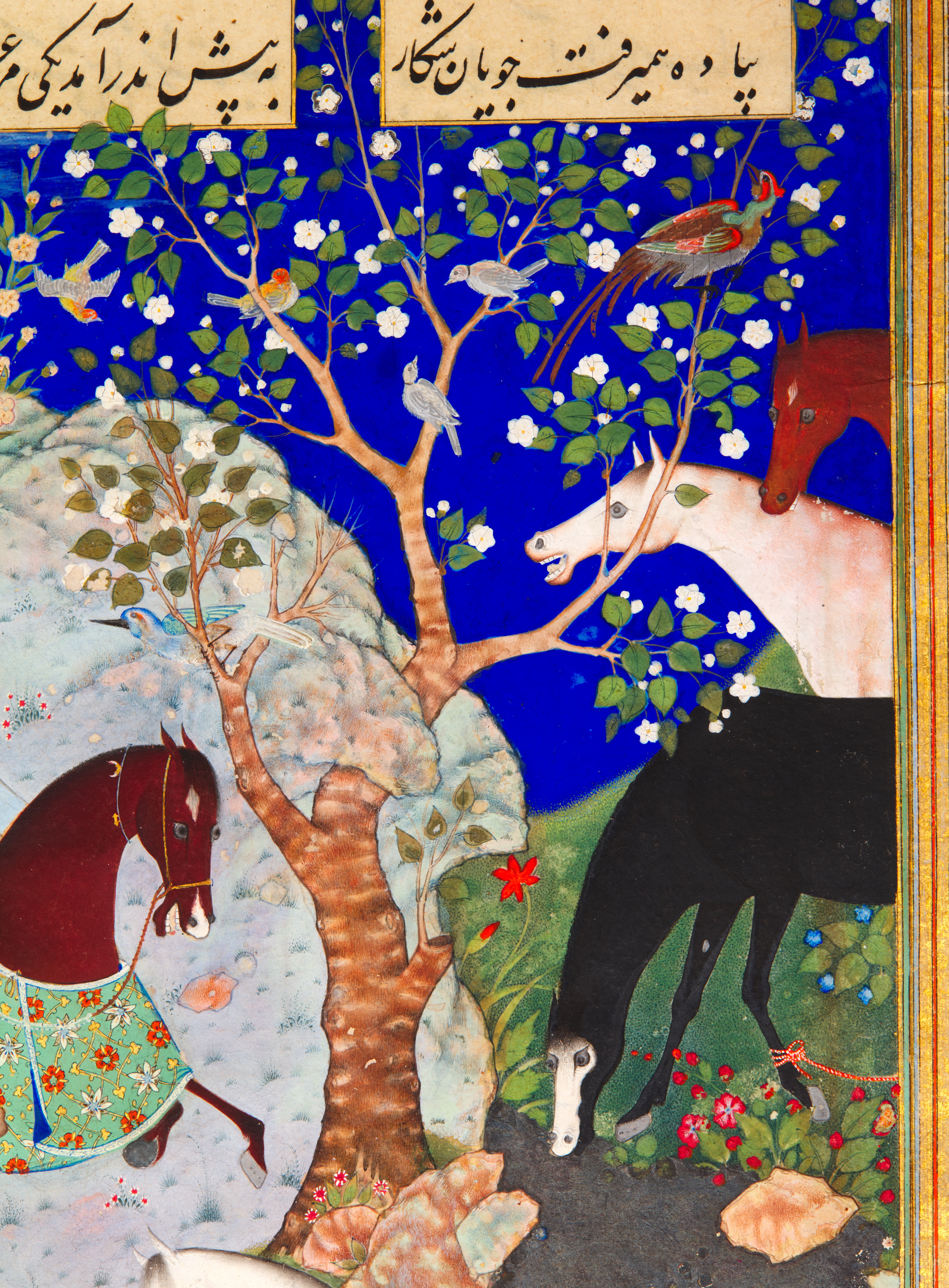
A 16th-century folio from the Shahnameh of Shah Tahmasp, one of the most celebrated illustrated manuscripts in Persian art, will be offered at Sotheby’s London on 26 October 2022 with an estimate of £4 million to 6 million. It appears as part of the house’s twice-yearly Arts of the Islamic World & India auction.
The Shahnameh, or Book of Kings, made for Shah Tahmasp of Persia (reigned 1524 to 76), tells the history of Persia’s rulers across roughly 50,000 rhyming couplets. The most lavishly illustrated copy of the 10th-century poem, it was produced over two decades from about 1520 to 1540 by the leading artists of the royal atelier. The folio on offer depicts the hero Rustam recovering his horse Rakhsh, a name drawn from the Persian word for lightning.
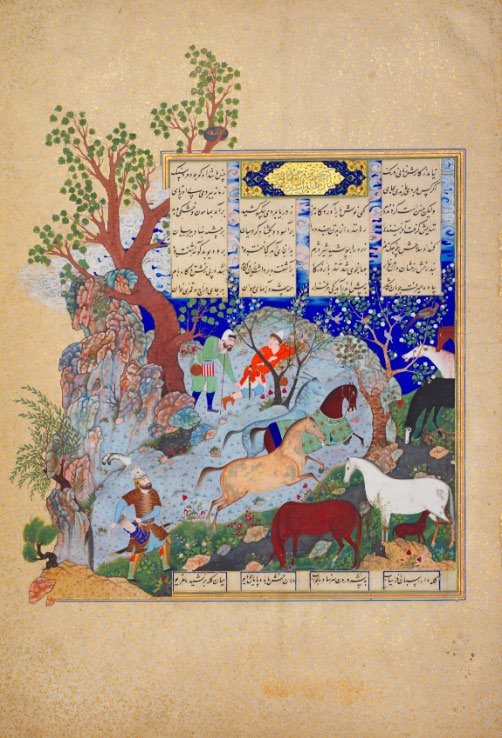
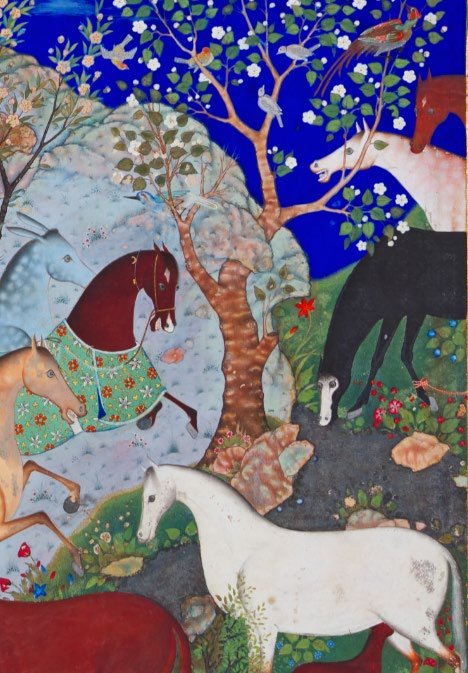
The manuscript carries a notable provenance: commissioned by Shah Ismail, the first Safavid, completed under his son Shah Tahmasp, gifted to Sultan Selim II of the Ottoman Empire, and later held by the Barons de Rothschild. A folio from the same manuscript, sold at Sotheby’s in 2011, holds the auction record for any Islamic work on paper. Other folios are today held in museums including the Metropolitan Museum of Art, the Aga Khan Museum in Toronto and the Museum of Islamic Art in Doha.
The wider sale includes rare works of art and jewellery. A Fatimid carved rock crystal bottle, Egypt, late 10th to early 11th century, is estimated at £40,000 to 60,000, while a pair of crescent-shaped pearl and diamond earrings, Hyderabad, late 18th century, from the collection of the Nizam of Hyderabad, carries an estimate of £50,000 to 70,000. A Mughal gem-set glass-hilted dagger and scabbard, 18th century, is estimated at £80,000 to 120,000.
Two pieces reputedly once owned by Maharani Jindan Kaur (1817 to 63), wife of Maharaja Ranjit Singh, are also offered: a carved emerald and diamond-set gold bazuband (est. £120,000 to 150,000) and a gem-set and enamelled belt buckle (est. £40,000 to 60,000). After the annexation of the Punjab, Jindan Kaur was imprisoned, escaped disguised as a servant and later reunited with her son, who negotiated the return of her jewels.
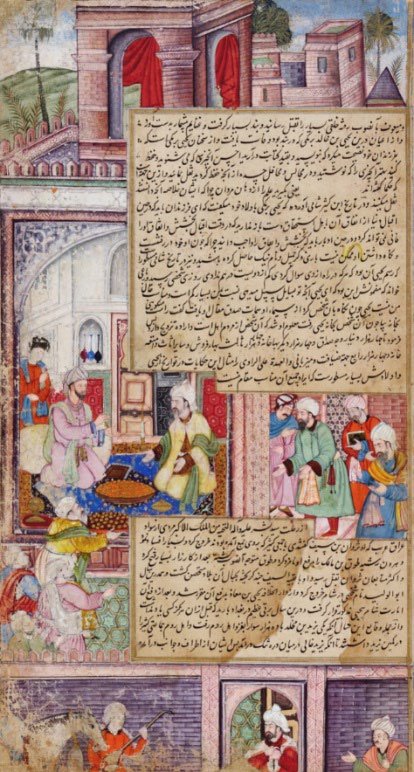
Works on paper and manuscripts include a double-sided illustration to the Tarikh-i-Alfi, Imperial Mughal, circa 1590 (est. £250,000 to 350,000), thought to be the last such folio in private hands; an illuminated Qur’an copied by Yusuf ibn ’ Abdullah, Safavid Persia, dated 1575 to 76 (est. £400,000 to 600,000); and a monumental Kufic Qur’an leaf, Near East or North Africa, circa 750 (est. £250,000 to 350,000).
The sale also features 15 Indian paintings from the collection of Betsy Salinger, spanning Mughal, Pahari, Rajasthani and Deccani schools. Among the highlights are The Pilgrimage of Maharana Sangram Singh of Mewar, circa 1720 to 30 (est. £80,000 to 120,000), and An Encampment of Ascetics, a Deccani painting of circa 1680 depicting some forty figures (est. £60,000 to 80,000).
(Press Release)