

Watches, art, cars, jewelry, handbags, wine and more — cleaned, USD-normalized, and searchable.
Get Started →
Sotheby’s spring sale of Arts of the Islamic World & India takes place on 31 March 2021, offering historic objects, paintings and manuscripts spanning several continents and more than ten centuries.
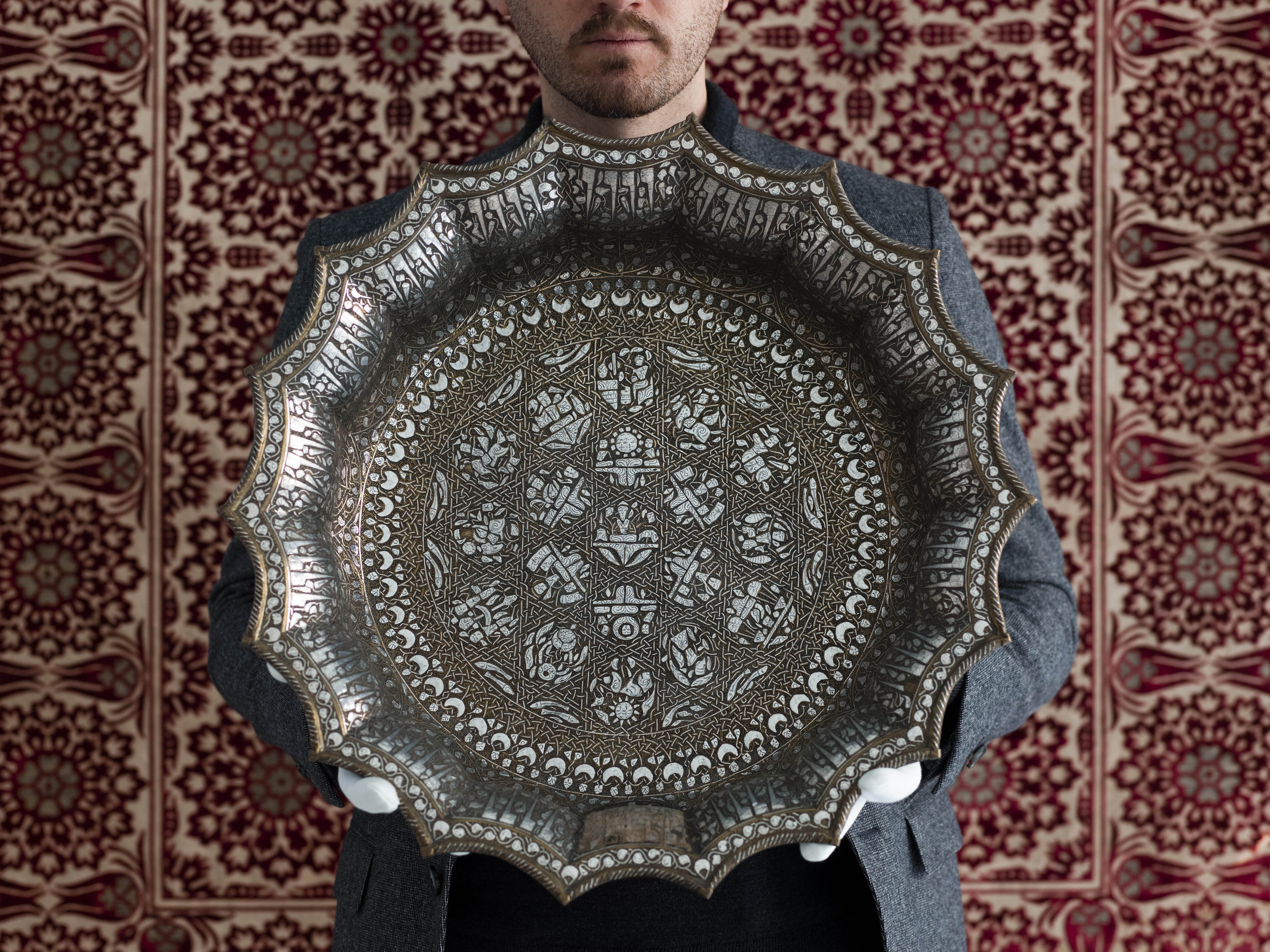
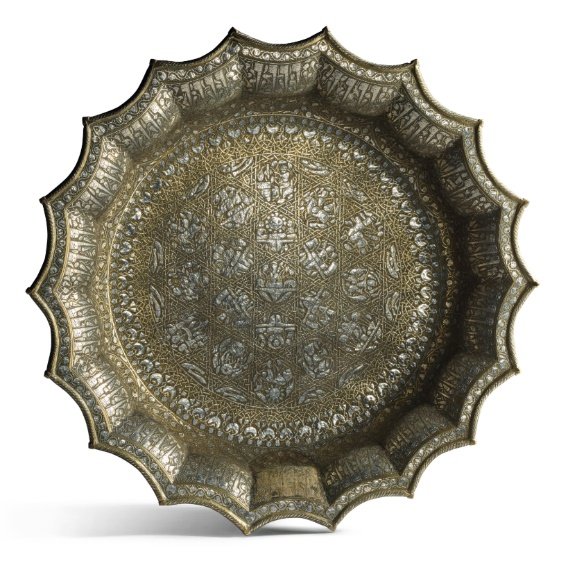
The auction is led by a twelfth-century silver-inlaid scalloped basin adorned with astrological designs (est. £1,000,000 to £1,500,000), measuring fifty centimetres in diameter. Made in the shape of the sun and featuring zodiac signs, planets, animal heads and calligraphic scripts, the basin was designed to symbolise the universe. It has never previously been exhibited, having remained in the same private family collection for decades, and makes its auction debut.
Also on the astronomical theme is a fourteenth-century astrolabe (est. £600,000 to £800,000), described as the only known example created by a Muslim artist in a Christian-ruled city. It was made in Tudela, part of Muslim Andalusia until the city was taken in 1119 by Alfonso I of Aragon.
Among the carpets is a mid-sixteenth-century silk prayer rug (est. £300,000 to £500,000), a royal commission from the Safavid court of Iran, one of very few in existence, with the last comparable piece offered at auction in 2010. A mother-of-pearl casket from sixteenth-century Gujarat (est. £250,000 to £350,000) belongs to a rare group of fewer than ten known examples, most now in museum collections.
Paintings include a newly discovered sixteenth or seventeenth-century portrait of Süleyman the Magnificent on copper (est. £80,000 to £120,000), and a large-scale, previously unpublished miniature of the court of Maharaja Ranjit Singh (est. £40,000 to £60,000), circa 1870 to 1871. The sale also offers the first known European representations of Mecca and Medina, by Sir Jean Chardin (est. £60,000 to £80,000), drawings formerly in the collection of John Evelyn.
Among the manuscripts is a Mamluk Qur’an dated 1514 (est. £300,000 to £500,000), a complete manuscript signed by a well-known master and made for the Chief Justice of Jerusalem and Nablus.
(Press Release)