


Price Check values a single luxury item against millions of real auction results, in seconds. Or go deeper with our luxury market reports.
Player shows the Luxury Spending feed. Open the episode for this date on your platform of choice.
A weekly look at the consumer side of luxury: the watches, jewelry, and handbags people actually buy, wear, and collect. This week: the trophy ceiling in personal luxury, a boom in colored gemstones led by a 3.4 million dollar run of Paraíba tourmalines, the high-jewelry houses going big as the everyday market cools, and a famous fair returning to Basel.
Good morning. It's Wednesday, June 24. I'm Sharon, and this is Luxury Spending from ALT/FNDATA, our weekly look at the consumer side of the luxury market, the watches, the jewelry, and the handbags that people actually buy, wear, and collect.
This episode of Luxury Spending is brought to you by ALT/FNDATA, the market intelligence platform for insights on the luxury markets and related public equities. With a membership, you can unlock access to dashboards, reports and cutting-edge insights to keep your finger on the pulse of the market and drive your competitive advantage. Learn more at altfndata.com/membership.
This week: the trophy ceiling in personal luxury, from a nearly half-million-dollar Birkin to a 25 million dollar jade necklace; a boom in colored gemstones, led by a 3.4 million dollar run of Paraíba tourmalines at Sotheby's; the high-jewelry houses going big as the everyday market cools; and a famous name returning to Basel.
Let's start with a number, or really three of them, from our own database. Look at the very top of personal luxury over the past year, and the ceiling is remarkably firm. In handbags, the highest results are all Hermès, led by a Birkin in matte alligator that sold for about 490,000 dollars at Christie's, with an iconic white Himalaya crocodile close behind at around 460,000. In watches, the high mark is an F.P. Journe, which fetched 10.8 million dollars at Phillips in New York. And in jewelry, the ceiling is higher still, at about 25.6 million dollars, the level a magnificent jadeite bead and coloured diamond necklace reached at Christie's just last month.
That jadeite necklace is worth pausing on. Jadeite is the rarest and most valuable form of jade, and jade has been the most treasured gem in Chinese culture for centuries, once reserved for the emperors of the Qing court. The finest jadeite still draws the deepest-pocketed collectors in Asia, which is what can put a string of beads in the same league as a major diamond.
The theme we keep returning to on this show is the split in the market. While everyday luxury demand has cooled, and the big houses are shipping fewer goods, the trophy tier, the rarest watch, the perfect Birkin, the important colored diamond, is still setting eye-watering numbers. Scarcity, at the very top, is its own asset class.
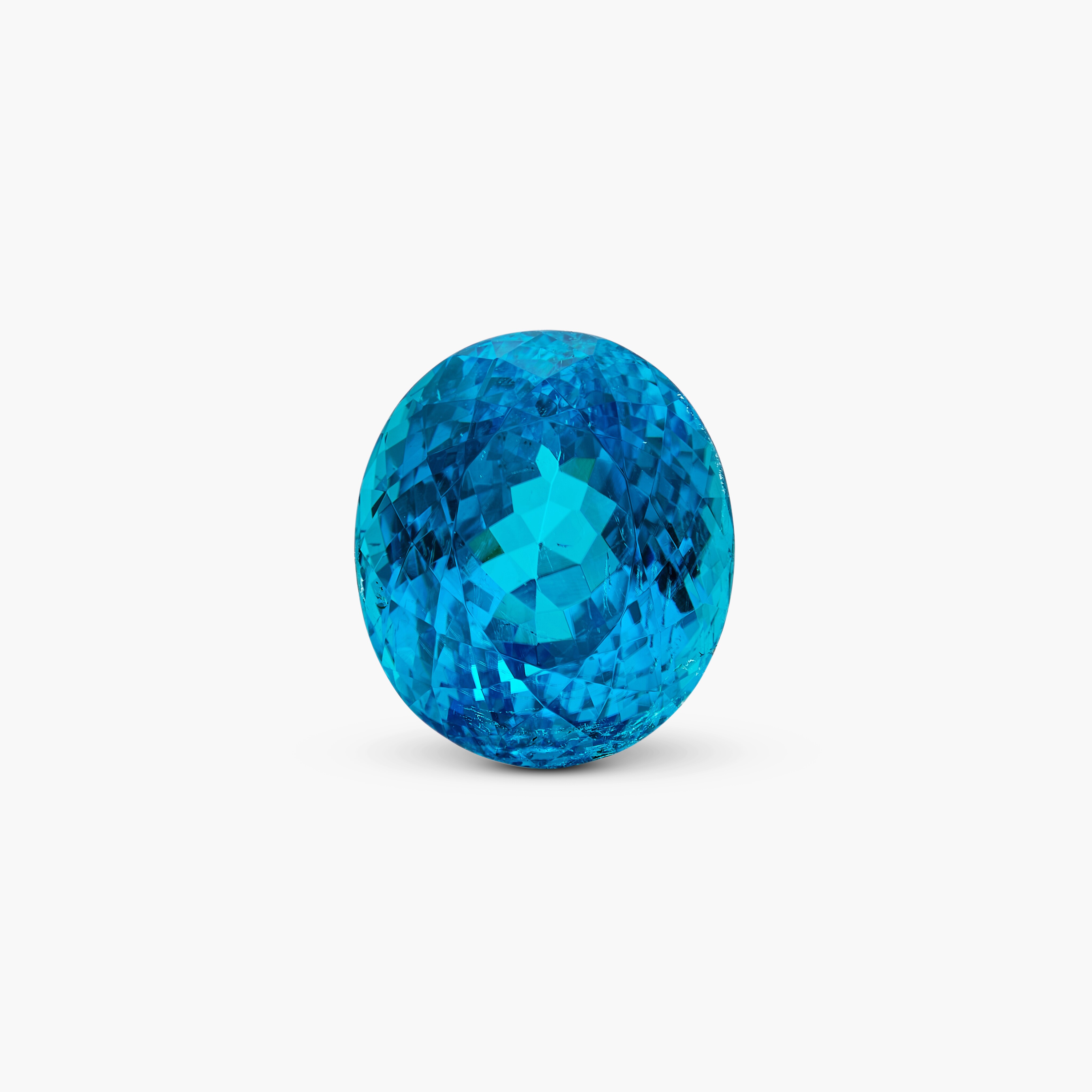
The hottest corner of the jewelry world right now is colored stones, and one sale captured it perfectly. At Sotheby's in New York, five Brazilian Paraíba tourmalines from a single private collection sold for a combined 3.4 million dollars. For anyone unfamiliar, Paraíba is a rare tourmaline with an electric, neon blue-to-green glow that you simply do not see in any other gem. The top stone, a 7.7-carat oval, sold for 1.4 million dollars, more than double its high estimate. That works out to roughly 182,000 dollars per carat, for a tourmaline, a stone that a generation ago sat far down the gem hierarchy.
The reason is simple supply and demand. The classic Brazilian deposits are nearly exhausted, so collectors are chasing a shrinking pool of fine material, and the trade is watching new finds closely, including stones that may come from a deposit in Ethiopia, according to Rapaport. One word of caution from the labs, though. SSEF, a leading Swiss gem lab, has issued a warning about emeralds that have been refilled to hide internal fractures. It is a reminder that in colored stones, authentication and provenance are everything, and that is exactly the kind of verification our data is built around.
If the everyday luxury shopper is pulling back, the great houses have a clear answer: chase the clients who never stop spending. This month, Van Cleef & Arpels unveiled a new high-jewelry collection themed on ancient Egypt, called Fascinating Egypt, and Piaget added a colorful new chapter to its Extraleganza trilogy. Roberto Coin marked its 30th anniversary with its largest-ever high-jewelry showing, staged in Venice.
High jewelry is the one-of-a-kind, made-to-order tier at the very top of a house's range, where the prices run into the millions and the margins and prestige are highest. The fact that so many maisons are pushing into it at once tells you where the confidence is: not in the entry-level handbag or the steel watch, but at the rarefied top, where demand has held up best.
To watches, where the collector's market remains the story. With auction prices still strong, WatchPro this week published a guide to 55 investment-grade watches to buy now, the Pateks, the Rolexes, and the independents that have held their value best through the cycle.
But the bigger story is structural, and it is about where this industry actually does its dealmaking. After years of a thinning calendar, the trade fairs are being rebuilt. The headline is the return of a major fair to Basel. Called Basilia, after the city's old Roman name, it will debut next April, in 2027, launched by MCH Group, which owns the Basel exhibition center, together with the events company Informa. It arrives eight years after the collapse of Baselworld, once the most important gathering in the entire watch and jewelry world, and it is pitched as roughly half jewelry, a quarter gemstones, and a quarter watches, with more than 400 exhibitors and a mission to reconnect Asian supply with European demand. And Basilia is not the only move. Watches and Wonders in Geneva, the show that absorbed much of the void Baselworld left, has just confirmed its 2027 dates and is adding new names, with Breitling and the Italian jeweler Damiani joining the lineup. On top of that, this week brought word of an entirely new jewelry trade event set to debut during Paris Fashion Week in October. After a long stretch of consolidation, the industry is suddenly building places to gather again.
A few quick notes to close. Staying with colored stones for a moment, a 6-carat sapphire took center stage at a recent Sotheby's sale in New York, one more sign of how much appetite there is right now for fine colored gems.
On the retail side, Rolex is partnering with Rockefeller Center ahead of opening a new Fifth Avenue headquarters. It is the latest step in the brand's steady march into owning its own stores, and with them, its relationship with the customer.
And for the collectors who would rather wear a piece than vault it, the new watches keep coming, from H. Moser's contender for the summer watch of 2026 to a rugged new Panerai Submersible built with the US Navy SEALs.
That's Luxury Spending for Wednesday, June 24.
For insights on the data behind today's stories, the ALT/FNDATA membership gives you access to a rich library of market data dashboards, reports and insights. Get started at altfndata.com/membership or reach us anytime at info@altfndata.com.
I'm Sharon, from ALT/FNDATA. Closing Price is this evening at 5 PM Eastern, and Auto Market is out tomorrow. If you enjoy the show, please subscribe and leave us a five-star rating.
This episode covered the $25.6 million jadeite necklace and the Paraiba run. Our analysis scores the shift: the four most expensive jewels of H1 2026 in our record are a jadeite and three colored diamonds, and white diamonds’ share of the million-dollar tier has fallen from 24 to 15 percent.